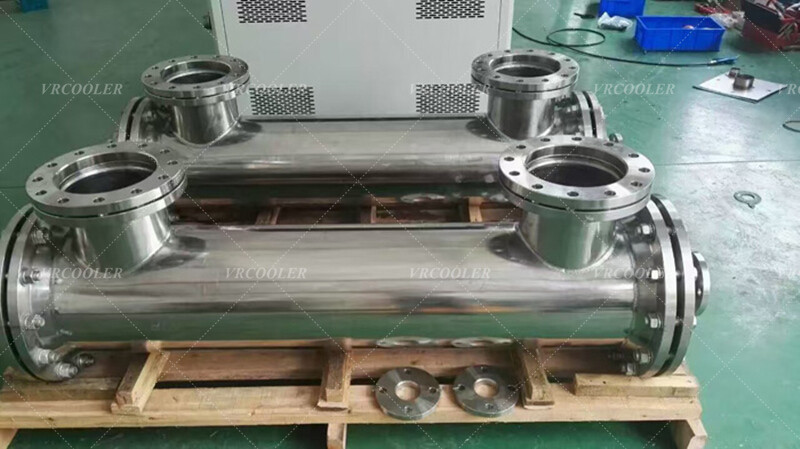
A shell-and-tube heat exchanger can suit data center heat reuse when pressure requirements, material compatibility, and service access are more important than a compact footprint.
Reasons to choose it include:
Pressure capability: It can be engineered for demanding operating pressures where a standard gasketed plate exchanger may not be suitable.
Maintenance access: Straight-tube designs with removable covers can provide access for tube-side inspection and mechanical cleaning. Shell-side access depends on the bundle construction.
Material flexibility: Tube materials and geometry can be selected to match the recovery-loop fluid, corrosion risks, and operating conditions.
Repair options: Depending on the construction, damaged tubes may be replaced or isolated, although any resulting capacity reduction must be assessed.
It is not automatically the best choice for low-temperature heat recovery. Plate heat exchangers often provide a smaller footprint and closer temperature approach, which can be valuable when the temperature difference between the data center loop and heating circuit is limited.
Choose a shell-and-tube design when those mechanical and maintenance advantages justify its space requirements—and confirm that it meets the required heat duty, temperature approach, and pressure drop.