
Engineering Built on International Safety Standards
ASME certification is not just a label, it represents a complete engineering system.
ASME shell and tube heat exchangers are designed according to strict rules covering material selection, wall thickness, stress analysis, welding procedures, and inspection processes. Every pressure-containing component must meet defined mechanical requirements to ensure safe operation under high pressure and temperature.
For customers, this means reduced project risk, easier acceptance by third-party inspectors, and full compliance with international regulatory requirements.
True Customization Beyond Standard Models
ASME customization allows shell and tube heat exchangers to be designed entirely based on real process conditions.
Key customizable parameters include:
Operating pressure and temperature.
Heat duty and heat transfer area.
Shell diameter and tube length.
Nozzle orientation and connection type.
Installation form (horizontal or vertical).
Instead of adapting the system to the equipment, ASME customization adapts the equipment to the system.
Manufacturing Quality That Can Be Traced
ASME production emphasizes full traceability throughout the manufacturing process.
Material certificates, welding records, heat treatment reports, and inspection documents are all recorded and archived. Each welding joint follows approved Welding Procedure Specifications (WPS), and welders must be ASME-qualified.
This level of documentation ensures not only product quality, but also long-term accountability and after-sales reliability.
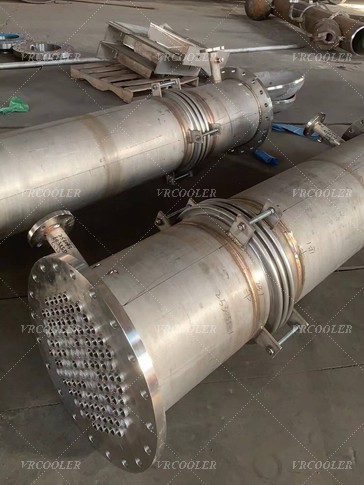
Stronger Performance Under Real Industrial Stress
ASME shell and tube heat exchangers are designed for continuous heavy-duty operation.
They perform reliably under:
High internal pressure.
Frequent thermal cycling.
Aggressive process media.
Long operating hours.
This makes them ideal for refineries, gas processing plants, hydrogen systems, power stations, and carbon capture facilities where equipment failure is not acceptable.
Long-Term Value Beyond Initial Investment
Although ASME equipment requires higher initial investment, the long-term value is significantly higher.
Benefits include:
Lower failure rate.
Longer service life.
Reduced maintenance cost.
Higher resale and project approval value.
For international EPC projects and high-risk process systems, ASME-customized shell and tube heat exchangers are not just optional—they are often mandatory.
In real industrial operations, ASME certification represents engineering credibility, operational safety, and long-term business value.