
Structural Innovation That Redefines Shell and Tube Design
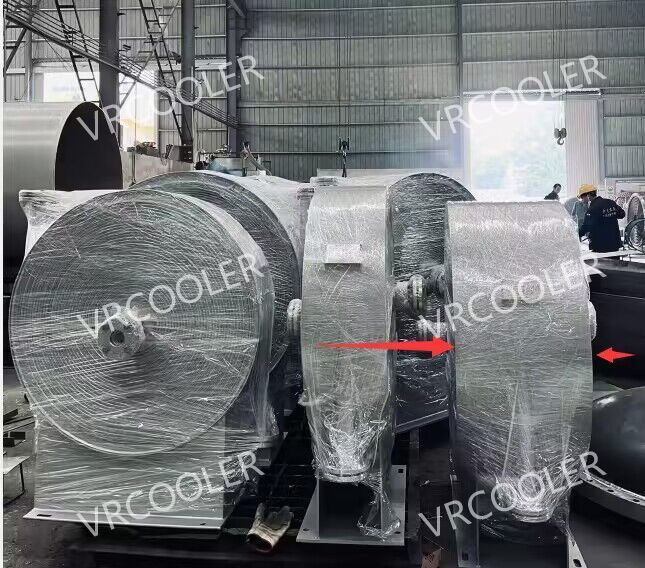
The plate and shell heat exchanger replaces the traditional tube bundle with fully welded plate packs installed inside a pressure-resistant shell.
The plate pack creates complex flow channels, increasing turbulence and heat transfer efficiency.
The outer shell provides strong mechanical protection under high-pressure conditions.
The compact structure significantly reduces footprint compared with conventional shell and tube exchangers.
This hybrid structure brings together efficiency and safety in one integrated solution.
Upgraded Heat Transfer Mechanism Driving Performance
Unlike conventional straight tube flow, the plate channels force fluids to change direction continuously.
High turbulence reduces thermal boundary layers.
Larger effective heat transfer area per unit volume.
Excellent performance under low temperature difference and fluctuating load conditions.
As a result, plate and shell exchangers can achieve the same duty with smaller equipment size or higher output within the same space.
Material Engineering and Manufacturing Control
Material selection and fabrication play a key role in plate and shell heat exchanger reliability.
Plate and shell materials are customized according to pressure, temperature, and media properties.
Fully welded construction eliminates gasket aging and leakage risks.
Critical welds undergo non-destructive testing to ensure structural integrity.
This manufacturing philosophy guarantees long-term safety and reduced maintenance costs.
Project Execution From Design to Delivery
This project was managed through a complete engineering workflow.
Thermal calculations and mechanical verification ensured design accuracy.
Key production stages were strictly monitored for quality and schedule.
Final pressure and performance tests validated operational stability.
The systematic execution reflects strong project management and production capability.
Industrial Value Across Multiple Applications
Thanks to their high efficiency and compact design, plate and shell heat exchangers are widely used in:
Petrochemical cooling, condensation, and heat recovery systems.
Energy and power plants for waste heat utilization.
Gas processing, refrigeration, and environmental equipment.
Their flexibility and customization make them ideal for modern industrial systems requiring both performance and reliability.