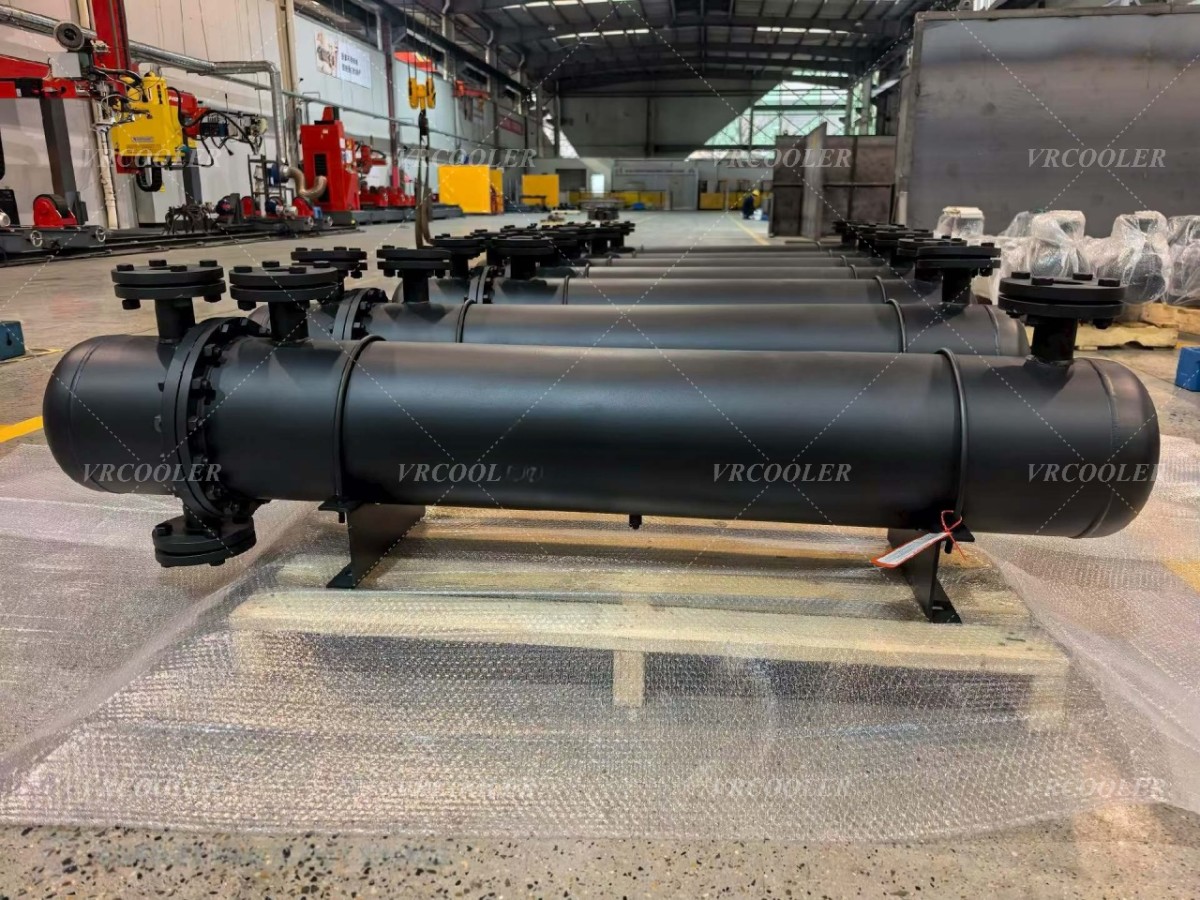
A closed feedwater heater transfers heat from extraction steam to boiler feedwater without allowing the two fluids to mix. In a typical shell-and-tube design, feedwater flows through the tubes while extraction steam from the turbine enters the shell side.
The extraction steam condenses on the outer surfaces of the tubes, releasing heat through the tube walls. This raises the feedwater temperature before it enters the boiler, economizer, or heat-recovery steam generator. The condensed extraction steam, called heater drain, is collected and directed to a lower-pressure heater, deaerator, or condenser.
A level-control system maintains the correct condensate level, while vents remove non-condensable gases that could reduce heat-transfer performance. The heater’s operation is commonly monitored using feedwater temperature, pressure drop, terminal temperature difference, and drain cooler approach.