
A jacket-water cooler is normally hydrostatically tested by filling one fluid circuit completely with clean water, removing all trapped air and gradually increasing the pressure with a test pump. The shell side and tube side must be tested separately because they may have different design pressures.
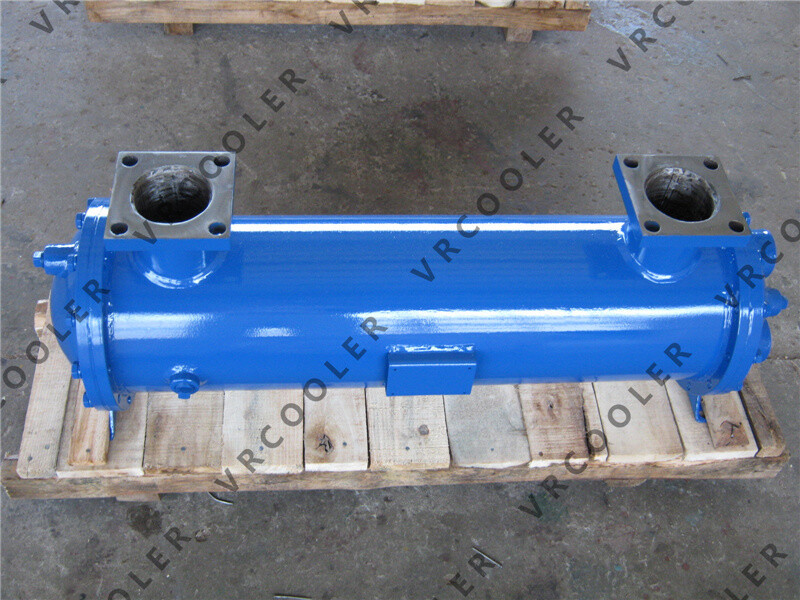
When testing the tube side, the seawater connections are blanked and pressure is applied inside the tubes and water boxes. The tube ends, bonnet gaskets, drain plugs, flanges and tube-to-tube-sheet joints are inspected for leakage. Any water appearing on the shell side may indicate a leaking tube or defective tube joint.
The shell side is then filled and pressurized while the tube side remains open or is monitored separately. This test checks the shell, nozzles, freshwater connections and external tube-to-tube-sheet joints. Pressure should be raised slowly to avoid water hammer and damage to gaskets or lined water boxes.
The required test pressure must follow the approved drawing, manufacturer’s instructions and applicable marine-class rules. A workshop hydrostatic test is commonly conducted at a specified multiple of the design pressure, often around 1.3–1.5 times, but this value should never be assumed for an older cooler. Tube condition, material, previous corrosion and the allowable pressure of bonnets and seals must first be verified.
The pressure is held for the specified period while checking for visible leakage, pressure loss and deformation. If internal leakage is suspected, individual tubes can be tested with plugs, compressed air at a controlled low pressure, or specialized tube-testing equipment. Pneumatic testing involves greater stored-energy risk and should only be performed using an approved procedure and proper safety controls.
After testing, the pressure is released slowly, the cooler is completely drained and the seawater side is rinsed and dried when necessary. Test pressure, holding time, water temperature, gauge identification and results should be recorded in the inspection report. Before returning the cooler to service, all temporary blanks must be removed and the original gaskets, vents, drains and protective anodes correctly installed.