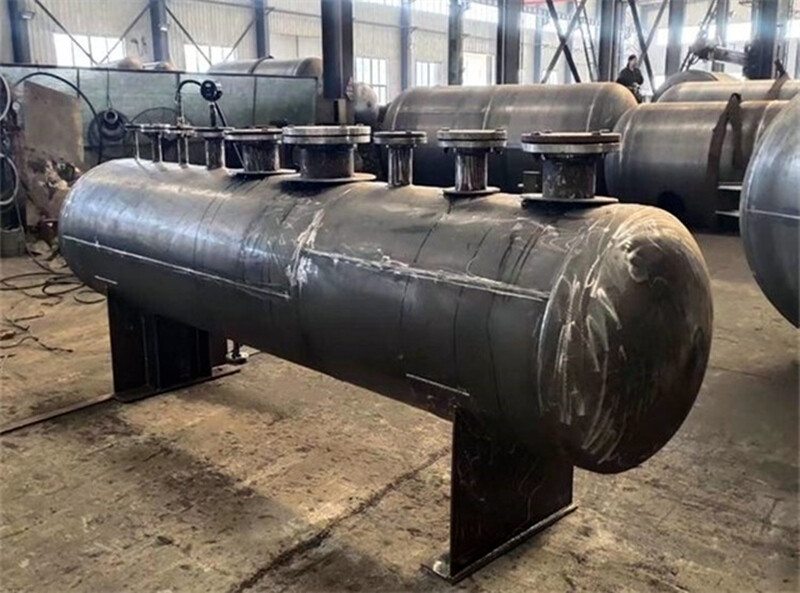
Enhancing steam header performance leads to more efficient operation, energy savings, and longer equipment life. Below are proven methods:
1. Maintain Proper Steam Velocity
Correct sizing helps avoid turbulence, moisture carryover, and erosion.
Saturated steam: 20–25 m/s
Superheated steam: 30–40 m/s
2. Ensure Adequate Drainage and Steam Traps
Condensate inside a header can cause water hammer and reduce steam quality. Properly placed drains and traps are essential for safe operation.
3. Apply High-Performance Insulation
Good insulation reduces heat loss, saves fuel, and keeps steam dry.
4. Optimize Nozzle Arrangement
Strategic positioning of inlets and outlets minimizes turbulence and improves flow distribution.
5. Install Moisture Separation Devices (if required)
For processes that require very dry steam, adding a separator or baffle inside the header significantly improves performance.
6. Maintain Reliable Pressure Control
Non-return valves, pressure gauges, and PRVs help maintain stability—especially when several boilers feed the same header.
7. Conduct Regular Inspection
Checking welds, gaskets, internal corrosion, and drainage systems ensures long-term reliability.
A properly designed and well-maintained steam header is essential for the stability, efficiency, and safety of industrial steam systems. By improving steam quality, reducing pressure fluctuations, and enabling multi-boiler operation, steam headers play a central role in modern process engineering.