
Cooling demand in lubrication systems
Continuous heat generation in oil circuits
In hydraulic and lubrication systems, oil continuously absorbs heat from mechanical components such as pumps, bearings, and gear systems. Without proper cooling, oil temperature can rise quickly, affecting system efficiency and component lifespan.
Temperature sensitivity of hydraulic oil
Hydraulic oil must operate within a specific temperature range to maintain viscosity and lubrication performance. Excessive heat reduces lubrication efficiency and may accelerate oil degradation.
Need for stable and controllable cooling
The cooling system must provide consistent temperature control under varying load conditions. This makes the selection of an appropriate heat exchanger type critical for system stability.
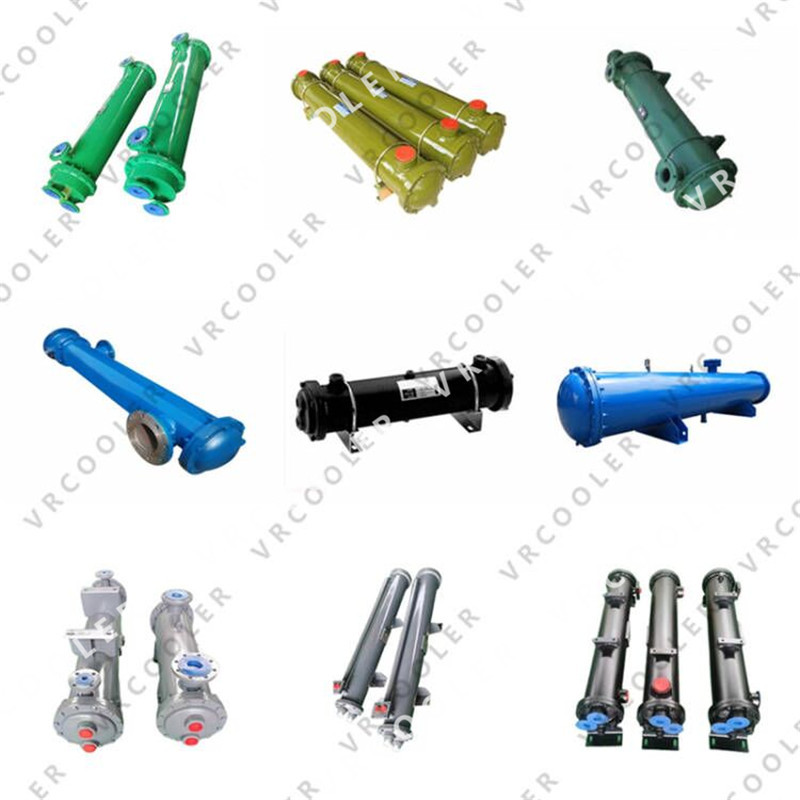
Working principle of oil cooler tube bundle
Direct heat exchange through compact tubes
Oil cooler tube bundles typically consist of a group of tubes where one fluid flows inside while the cooling medium flows outside. The structure is relatively simple and compact.
Focus on localized cooling applications
These units are often used in smaller systems or integrated equipment where space is limited and cooling demand is moderate.
Limited structural complexity
Compared with full shell and tube exchangers, tube bundle coolers have a simpler structure, which makes them easier to manufacture but less adaptable to complex conditions.
Working principle of shell and tube cooler
Separation of shell side and tube side flow
In a shell and tube heat exchanger, oil usually flows inside the tubes while cooling water flows on the shell side. This separation allows better control of flow paths and heat transfer.
Enhanced heat transfer through design flexibility
The use of baffles, multi-pass tubes, and optimized layouts improves turbulence and heat transfer efficiency.
Adaptability to different operating conditions
Shell and tube designs can be customized for high temperature, high pressure, or large flow conditions, making them suitable for industrial-scale applications.
Structural and performance differences
Heat transfer efficiency comparison
Shell and tube exchangers generally provide higher heat transfer efficiency due to their larger surface area and flow optimization design.
Pressure and temperature handling capability
Shell and tube units are more suitable for higher pressure and temperature conditions, while tube bundle coolers are typically used in lower-demand scenarios.
Flexibility in design and customization
Shell and tube exchangers can be tailored to specific process requirements, whereas tube bundle units have more standardized configurations.
Maintenance and operational considerations
Ease of cleaning and inspection
Shell and tube heat exchangers allow tube bundle removal for cleaning and maintenance, which is important in systems prone to fouling.
Replacement and repair convenience
Tube bundle coolers are easier to replace as a whole unit, but may not allow detailed internal maintenance.
Long-term operational reliability
For continuous industrial operation, shell and tube exchangers often provide better durability and lower long-term maintenance frequency.
Final selection in customer project
Evaluation based on real conditions
The customer compared both options considering flow rate, temperature range, and installation space.
Preference for stable industrial solution
Due to higher reliability and better performance, the shell and tube heat exchanger was selected.
Improved system performance after installation
After implementation, the oil temperature remained stable, and the system operated efficiently with reduced risk of overheating.