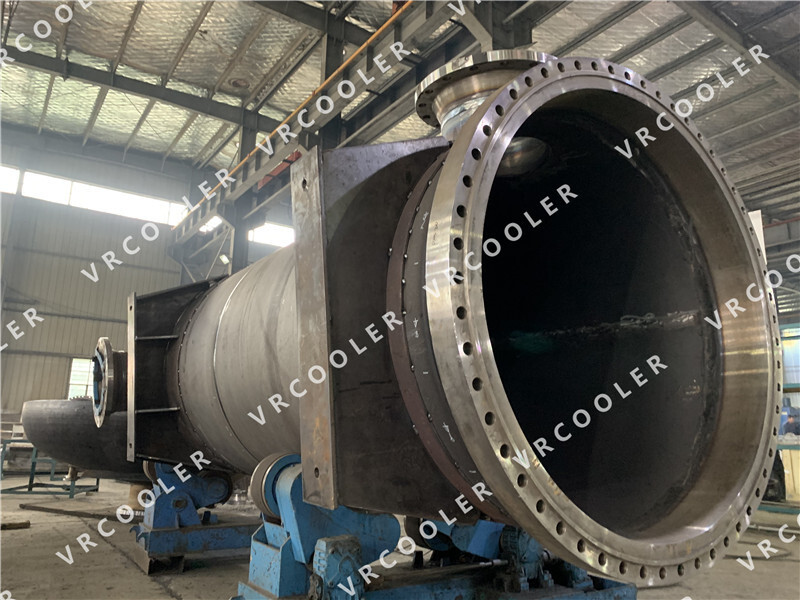
From Distillation Vapor to Controlled Liquid Recovery
During distillation processes, vapor rises through the column as components separate based on boiling point differences.
When the vapor reaches the top of the column:
It enters the overhead condenser.
Cooling medium absorbs the thermal energy.
Vapor condenses into liquid form.
This condensed liquid is divided into two streams:
Reflux returned to the column
Product collected for further processing
The condenser therefore plays a direct role in controlling separation efficiency.
Heat Transfer Pathways That Enable Efficient Cooling
Inside the shell and tube overhead condenser, heat transfer occurs across the walls of numerous tubes.
The process typically involves:
Cooling water or another medium flowing inside the tubes
Process vapor flowing across the outside of the tubes
Heat moving through the metal tube walls
This indirect heat transfer ensures that the cooling medium and process fluid remain completely separated.
Process Stability Supported by Proper Condenser Design
A well-designed overhead condenser helps maintain the operational stability of the entire distillation unit.
It helps regulate:
Column pressure
Vapor condensation rate
Reflux ratio
Product recovery efficiency
These factors directly influence the performance of the separation process.
Fabrication Expertise Behind High Performance Equipment
Producing a reliable overhead condenser requires experienced manufacturing techniques.
Important fabrication stages include:
Tube bundle assembly
Shell rolling and welding
Baffle installation
Final equipment alignment
Each stage contributes to the mechanical strength and heat transfer efficiency of the exchanger.
Inspection Procedures Confirming Product Quality
To ensure reliability, the overhead condenser underwent comprehensive quality inspection before delivery.
Inspection procedures included:
Hydrostatic pressure testing
Weld seam examination
Leak detection testing
Visual and dimensional verification
These checks confirm that the equipment is ready for safe operation.
A Practical Heat Transfer Solution for Industrial Clients
The completed shell and tube overhead condenser now provides a dependable solution for the client’s distillation system.
Its benefits include:
Efficient vapor condensation
Stable process control
Long operational lifespan
Adaptability to industrial environments
This project illustrates how customized shell and tube overhead condensers continue to support modern petrochemical and chemical processing industries.