
A steam sea water heater is a practical and dependable piece of equipment used on many vessels where sea water must be heated safely and efficiently. In marine service, reliability matters as much as thermal performance. Equipment is expected to work in a corrosive environment, tolerate vibration, fit into limited engine room space, and continue operating under demanding conditions at sea. That is exactly why steam-heated sea water units remain a trusted solution for shipowners, shipyards, and marine system integrators.
In simple terms, a steam sea water heater uses steam as the heating medium to raise the temperature of sea water for a specific onboard process. Steam transfers heat quickly and uniformly, making it well suited for marine heating duties where stable temperature control is important. Depending on the vessel and system design, the heated sea water may be used in accommodation services, process support, cleaning systems, desalination-related duties, or other auxiliary marine applications.
For marine use, the construction of the heater is especially important. Sea water is one of the most aggressive working fluids used in heat transfer equipment. Its salt content, oxygen, and biological matter can accelerate corrosion and fouling if the wrong materials are selected. A well-designed marine steam sea water heater therefore needs more than good heat transfer performance. It also needs the right metallurgy, solid welding quality, proper flange standards, and a layout that is easy to install and maintain onboard. Materials such as copper-nickel, titanium, stainless steel, or other corrosion-resistant alloys are often considered depending on the water quality, design life, and budget of the project.
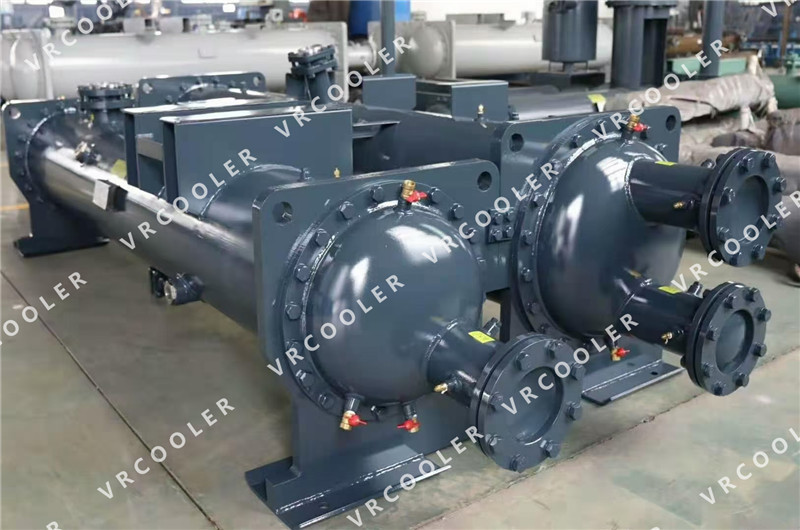
The unit shown here is a horizontal heater designed with dedicated marine-style flanged connections for sea water inlet, steam inlet, and condensate outlet. This kind of arrangement is common in engine room installations because it allows straightforward piping integration and convenient maintenance access. Steam enters the heater and releases its latent heat, while condensate is discharged separately after heat transfer. This not only improves heating efficiency but also helps keep the system stable during continuous operation. On vessels, this stable performance is valuable because fluctuating temperature can affect downstream equipment and overall system reliability.
Another advantage of a steam sea water heater for marine application is compact heat duty in a relatively simple structure. Compared with some electrically heated systems, steam heating can be more suitable where shipboard steam is already available from boilers or waste heat systems. In those cases, the heater becomes part of an efficient thermal network onboard, using existing energy sources instead of adding unnecessary electrical load. For many commercial ships and offshore platforms, that is an important engineering and operating benefit.
Marine operators also pay close attention to maintenance. A good heater design should allow easy inspection of the heat transfer area, convenient cleaning of sea water passages, and reliable replacement of gaskets or sealing components when needed. Since sea water can cause scale, marine growth, and deposits over time, serviceability should never be overlooked. A robust end cover design and accessible connection arrangement can reduce downtime and make onboard servicing much easier for the crew.
From a safety standpoint, steam sea water heaters used at sea must be designed for the required pressure class and marine operating conditions. Proper flange ratings, drain design, support legs, and structural strength all matter. Shipboard equipment faces motion, vibration, and limited installation tolerances, so mechanical stability is just as important as thermal calculation. A properly engineered unit will take these real marine conditions into account from the start rather than being treated as a standard land-based heater.
Customization is often necessary in marine projects. Different vessels require different heating capacities, connection sizes, pressure ratings, materials, and dimensional constraints. Some shipowners may need a compact replacement unit for retrofit work, while others may require a completely new design for a newbuild vessel. In either case, the best steam sea water heater is the one designed around the actual operating data, available space, class requirements, and maintenance expectations of the ship.
In marine applications, dependable heat transfer equipment is not just about performance on paper. It is about long-term operation in harsh service. A well-built steam sea water heater offers efficient heating, a simple working principle, and the durability needed for onboard use. When properly designed for marine conditions, it becomes a reliable part of the vessel’s auxiliary system and helps ensure smooth operation day after day, voyage after voyage.