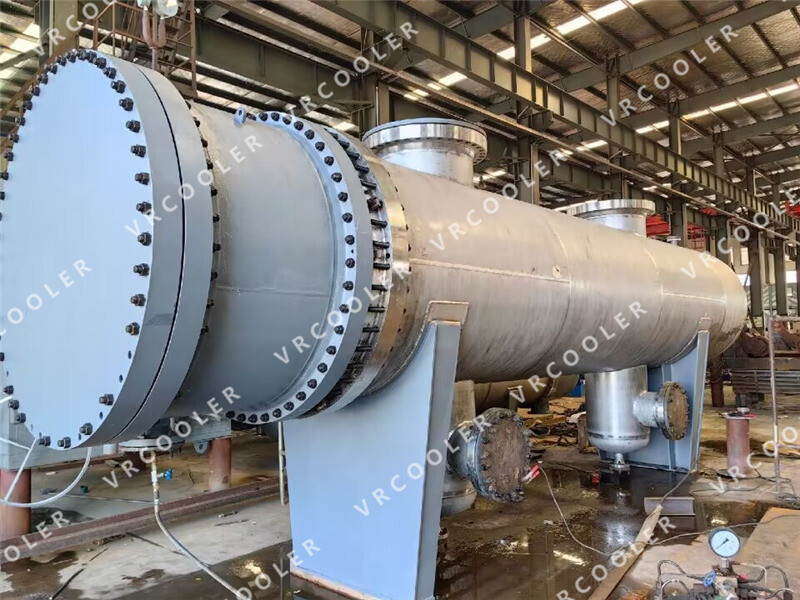
A surface condenser operates under vacuum to reduce the pressure at the steam-turbine exhaust. This allows steam to expand further through the turbine and convert more of its energy into shaft power. Under suitable operating conditions, lower exhaust pressure improves turbine output and the thermal efficiency of the steam cycle. The target pressure must suit the turbine design and cooling conditions.
The vacuum is established and maintained through steam condensation and air removal. As exhaust steam transfers heat to the cooling water through the tube walls, it condenses into liquid and occupies much less volume. Vacuum equipment evacuates air during startup. During normal operation, steam-jet air ejectors or liquid-ring vacuum pumps continuously remove air and other non-condensable gases that enter the system.
The achievable vacuum depends on cooling-water temperature, water flow, steam load, and the condenser’s heat-transfer performance. Warm cooling water, fouled tubes, or insufficient flow can raise condensing pressure. Air leakage can also increase pressure and obstruct heat transfer. Maintaining clean tubes, adequate cooling-water circulation, effective air removal, and leak-tight connections helps keep turbine backpressure within the specified operating range.