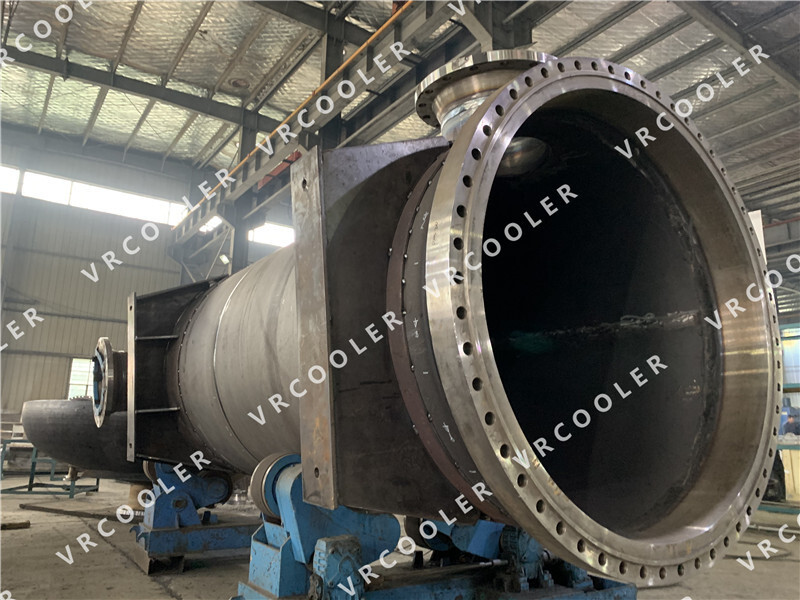
It is called a “surface” condenser because the steam and cooling water are separated by a heat transfer surface.
In a steam surface condenser, exhaust steam flows around the outside of the tubes, while cooling water flows inside the tubes. The two fluids do not mix. Heat passes through the tube wall surface, and the steam releases its latent heat and condenses into water.
This is different from a direct contact condenser, where steam and cooling water come into direct contact and mix together.
For a power plant, marine steam system, or industrial steam turbine, this separation is very important because the condensate remains clean and can be returned to the boiler feedwater system. Boiler feedwater is treated water, so keeping it clean helps reduce water consumption, chemical cost, corrosion risk, and boiler scaling.
In simple terms: a surface condenser gets its name because condensation happens on the cooling tube surfaces, not by directly mixing steam with cooling water.