
An atmospheric condenser is a heat-exchange device that cools and condenses vapor using ambient air instead of cooling water. Hot vapor from the distillation column flows through finned-tube bundles or coils arranged in the open air, where ambient airflow removes heat and condenses the vapor into liquid.
Depending on site conditions, atmospheric condensers may operate with natural convection or be equipped with axial fans to increase airflow and improve cooling performance.
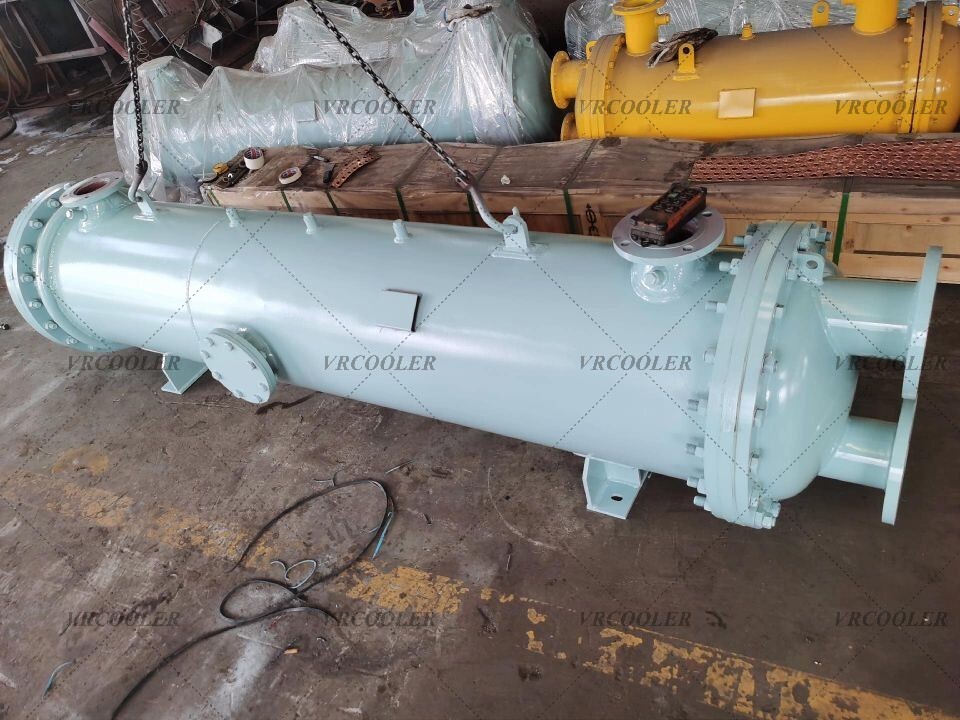
Why Distillation Units Use Atmospheric Condensers
Distillation processes generate overhead vapor that must be condensed before further processing, storage, or refluxing back into the column. In many cases—especially in solvent recovery, petrochemical separation, and small to mid-size process units—atmospheric condensers provide an efficient way to condense these vapors without relying on cooling towers, pumps, or water treatment systems.
Key reasons they are preferred in distillation systems:
No cooling water required – ideal for water-scarce or remote plants
Lower operating cost – minimal energy consumption and no water pumping
Reduced maintenance – fewer moving parts, no water quality or scaling problems
Simple integration – easily installed on rooftops, platforms, or beside distillation columns
Environment-friendly – eliminates water discharge and reduces overall plant footprint
How Atmospheric Condensers Work in Distillation Plants
Overhead vapor leaves the distillation column at a defined temperature and pressure.
The vapor enters the coil bundles of the atmospheric condenser.
Ambient air—natural flow or fan-driven—removes heat from the tube surface.
The vapor condenses into liquid, which flows to a collection tank, receiver, or reflux drum.
Non-condensable gases may be vented or routed to treatment systems.
In many units, atmospheric condensers function as the primary condenser; in hot climates, they may operate as pre-condensers upstream of a secondary water-cooled unit.
Typical Applications in Distillation Units
Atmospheric condensers are commonly used in:
Solvent recovery distillation columns
Petrochemical separation units
Biodiesel and biofuel production
Essential oil extraction
Chemical batch plants
Offshore production and reboiler vapor return lines
Small- and mid-scale continuous distillation systems
Their versatility makes them suitable for both high-temperature vapors and moderate-pressure distillation overheads.
Atmospheric condensers provide distillation units with a highly reliable, low-cost, and water-free solution for condensing overhead vapors. Their simple design, robust construction, and minimal maintenance requirements make them ideal for chemical processing plants, solvent recovery facilities, and many other industrial applications. For plants seeking sustainable and cost-effective vapor condensing technology, atmospheric condensers remain one of the most practical and efficient options.